Saturday, January 19, 2013

Mental ill budget Cuts

NAMI

National Alliance of Mental Illness

http://www.nami.org/template.cfm?section=about_the_issue

America’s Mental Health Care Future


As a nation, the U.S. is the third highest spender on health care per person, yet our health outcomes rank 37th compared to other nations. We can do better. Even though the economy is in dire condition, our nation will recover. Our nation’s health care system is undergoing a complete overhaul to prepare for better times ahead. A uniquely American approach based on the Patient Protection and Affordable Care Act (ACA) and the Mental Health Parity and Addiction Equity Act (Parity Act) will bring the insurance industry into line and strengthen public/private partnerships. However, NAMI’s advocacy is needed to prevent harmful consequences and ensure the right care at the right time and in the right place to give every child and adult living with mental illness the chance to succeed in the family, school, workplace and community.


Budget Advocacy


Budget cuts today are dismantling state mental health care systems at levels never faced before. NAMI's top advocacy priority is to protect and strengthen state and local public mental health services. (more)


The High Costs of Cutting Mental Health


The costs of cutting the state mental health budgets are high. The lives of the one in four Americans who experiences a mental illness at some point is at stake. Treatment works -- if you can get it.

Without treatment, more people will end up hospitalized, in shelters, on the street, in jail or dead. These are costs that are too high to pay.

Our fact sheets illustrate the impact of an inadequate mental health system on our communities . We can't afford to neglect our investment. Advocates are encouraged to print and use these in their efforts with elected public policy makers, the media and others.


Policy Webinars & Presentations


Managed Care, Medicaid and Mental Health


Mental Health Block Grant


The Substance Abuse and Mental Health Services Administration (SAMHSA) has developed two policy framework documents to provide guidance to state mental health authorities and community stakeholders regarding allocation of Mental Health Block Grant (MHBG) and Substance Abuse Prevention and Treatment block grant (SAPT) funding.

Wednesday, January 2, 2013

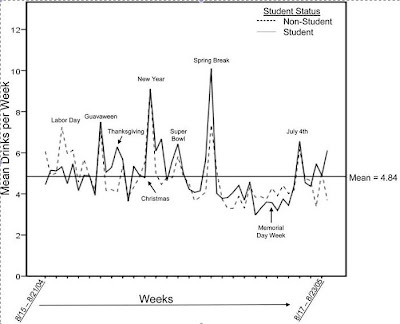
Does Relapse rate increase during holidays.

From Substance Matter by Dr. Mark Willenbring

It is the grand believe of 12 Step Programs that the Holydays is a great risk to alcoholics and people
with substance dependences.  Here is a study on that matter.
 
http://mattsub.blogspot.com/2012/12/do-relapse-rates-rise-around-holidays.html


Do relapse rates rise around the holidays?
Mark Willenbring, MD at Substance Matters: - 1 week ago

Many people assume that the time between Thansksgiving and the winter solstice holidays are the most difficult time of the year for people in recovery. Temptations are harder to avoid, what with office and holiday parties, family gatherings, and so forth. Many people with alcohol dependence come from families with many heavy drinkers, so alcohol may be flowing freely, and there may be others who are intoxicated. (Ever notice how boring and obnoxious intoxicated people can be if you're not intoxicated yourself?) So cue-induced craving is certainly an issue, whether your cues are vis... more »

Wednesday, December 19, 2012

Electronic Mail to a Disability Advocacy Attorney

I don't know if you sent this information exclusively to me or is it written in your blog for all of your subscribers.

As you may have noted this is a long time concern of mine.

[INFORMATION LEFT BLANK AS TO NOT TO IDENTIFY THE AUTHOR OF THIS EMAIL.  THE NAME OF THE ATTORNEY IS ALSO LEFT BLANK FOR HIS PRIVACY] 

I was not "Grandfather In" but rather I had to test and passed the licesing board examination in the first sitting (most candidates sit for the test a number of times before they pass it.).  I knew that their were some "missing links" but I thought is was the result of early science.  I was wrong, the field  is over 100 years old in 1879 with the first psychology laboratory at University of Leipzig founded by German physiologist  Wilhelm Wundt who used scientific research methods to investigate reaction times.  Outlined many of the major connections between the science of physiology and the study of human thought and behavior.  Science numerous laboratories have been founded at many universities and private enterprises worldwide.

It was not until I became a patient that I realized how wide spread the lack of science is behind the practice of psychotherapy and treatment.  The professions  have been lacking understanding of or total misconception of the sciences, not many evidence based treatment have been implemented. So is not that the science and appropriate protocols do not exist, but rather that the great majority of it is being outright ignored by the great majority of practitioners.  Guess who suffers? You have no idea how devastating such poor treatment can be to patients who comes to psychological treatment expecting the same kind of treatment you and I expect from the family practitioner that prescribe you an antibiotic for an infection, a medication for AIDS, physical therapy for an amputee etc. The latter have been rigorously tested while treatment for mental health and substance abuse is frequently based on junk science.  Mental Health is in better condition, for the most part, they receive empathetic responses from counselors which are frequently known to be

Nevertheless, as I have sat in the advisory board this has been biggest of concerns. The lack of relevant scientific standards. One would wonder why these issues has not come  up earlier.  The fact is that I am not alone regarding these concerns.  Professionals with a lot more credentials than I have been bringing these issues up at conferences  and American Psychological Association committees.  For the most part, their concerns seem to be falling in "deaf ears".  The committees etc. have a tendency to politically and politely compensate at the expense of patients receiving appropriate medical protocols.

The lack of scientific standards is pervasive and entrenched for the last one hundred years or so. Many of my colleagues who taken the science posture some of them seen that it maybe futile as the Am. Psychological Association and is allied professions have a tendency of not policing themselves well as they do not want to loose the membership fees that they so much needed to survive as an organization.  Most of my colleague believe that the problem will not be resolve until they receive external help from the legal professions in "search for the truth" and evidence. 

I have yet to read  these "Lawyer's Guide to Understanding Psychiatry" so I can not give you a full impression or review. But there are two issues that come up for me right away. There maybe accurate information in the book, but I am also wondering whether the physician author who wrote the book maybe "protecting the profession". Altough here the subject seem to be

Mine and colleagues concern are:

-Most information our society claims to understand about psychology, starting with the legacy left behind by Sigmund Freud and all his theoretical followers  is based on armchair speculation, hunches, "educational intuition", and "Case Study" the substantial majority  of these claims are hypothesis that have never been tested.

-In many cases rigorous quantitative empirical research do not support  the treatment approach used.  Nevertheless these speculations become popular believe systems that are frequently fallible.  They are mainly fads and we do not know whether they are effective, much less safe (i.e. when a patient commits  suicide we have assumed it is due to the nature of his mental illness, or the substance they were using like alcohol.  We have never questioned  whether it was the wrong treatment provide for the patients condition. Specially in alcohol and substance used disorder where treatment is frequently forceful, confrontational, and  abundantly  religious (even when public funds are used). Where the approaches are riddle with guilt and other emotionally badgering. Hoping to elicit some type of catharsis. When treatment fails, the patients is assumed to be responsible.  No other treatment approach blames the patient for the outcome, the outcome is always the responsibility of the professional not the patient.,
-When I reported a number of abuses to Department of Children and Family, even though they agreed on a number of violations. They could not denied because the evidence was so solid (I had an inch and half thick of patient's notes, treatment plans, discharge notes, and other documents with the patients names etc.) They have a total disregard for patients' privacy and confidentially. They openly discussed other patients' issues in front of other patients and used patients to harass other patients like me who had submitted a grievance (another issue for which they were found to violate).  This is a violations that I have witnessed frequently within a lot of the social service organizations.

-Yet even though I have a police report that stated that I was assaulted by staff member the staff was the aggressor and in fact the staff member ripped my cell phone from my hand and broke it in half because I was taking photos and videos of the staff misbehavior. Department of Children and Family did a superficial investigation. Took the staff members word at face value, the staff member provided them with a spook patient.  They blame me for the assault.  I had requested a Grievance Committee from the county or a Hearing from DCF and both of my request were ignored (I have copies of emails sent to authorities).

-I belong to a group who are openly stigmatized, discriminated against and outright bigotry behavior is not rare. We are thought to be thiefs, outright lies, manipulators and all sort of other negative characteristics. We would be consider clients with a limited capacity to be a witness. Yet longitudinal studies done Hester Reid and William Miller from University of New Mexico (2003 Handbook of Alcoholism Treatment Approach, please read thrugh this short book review(I have read all 3 volumes and own two of them http://www.jsad.com/jsad/downloadarticle/Handbook_of_Alcoholism_Treatment_Approaches_Effective_Alternatives/352.pdf  ) have found that alcoholics and substance dependent persons have the same kinds of personalities that you will find in the general populations

I didn't realized it was so pervasive (and I am part of the community) until I read an article by Dr Scott Lilienfled assistant professor from Emory University in Atlanta, Ga. He is a frequent contributor to Scientific America http://www.scientificamerican.com/author.cfm?id=1371 ,  I was in treatment years ago and I thought at the time it was an issue of lack of professional ethics by this individual facility. The name of the article "Assault on Scientific Mental Health" in

-                           


Nevertheless, as I have sat in the advisory board this has been biggest of concerns. The lack of relevant scientific standards. One would wonder why these issues has not come  up earlier.  The fact is that I am not alone regarding these concerns.  Professionals with a lot more credentials than I have been bringing these issues up at conferences  and American Psychological Association committees.  For the most part, their concerns seem to be falling in "deaf ears".  The committees etc. have a tendency to politically and politely compensate at the expense of patients receiving appropriate medical protocols.

The lack of scientific standards is pervasive and entrenched for the last one hundred years or so. Many of my colleagues who taken the science posture some of them seen that it maybe futile as the Am. Psychological Association and is allied professions have a tendency of not policing themselves well as they do not want to loose the membership fees that they so much needed to survive as an organization.  Most of my colleague believe that the problem will not be resolve until they receive external help from the legal professions in "search for the truth" and evidence. 

I have yet to read  these "Lawyer's Guide to Understanding Psychiatry" so I can not give you a full impression or review. But there are two issues that come up for me right away. There maybe accurate information in the book, but I am also wondering whether the physician author who wrote the book maybe "protecting the profession". Altough here the subject seem to be

Mine and colleagues concern are:

-Most information our society claims to understand about psychology, starting with the legacy left behind by Sigmund Freud and all his theoretical followers  is based on armchair speculation, hunches, "educational intuition", and "Case Study" the substantial majority  of these claims are hypothesis that have never been tested.

-In many cases rigorous quantitative empirical research do not support  the treatment approach used.  Nevertheless these speculations become popular believe systems that are frequently fallible.  They are mainly fads and we do not know whether they are effective, much less safe (i.e. when a patient commits  suicide we have assumed it is due to the nature of his mental illness, or the substance they were using like alcohol.  We have never questioned  whether it was the wrong treatment provide for the patients condition. Specially in alcohol and substance used disorder where treatment is frequently forceful, confrontational, and  abundantly  religious (even when public funds are used). Where the approaches are riddle with guilt and other emotionally badgering. Hoping to elicit some type of catharsis. When treatment fails, the patients is assumed to be responsible.  No other treatment approach blames the patient for the outcome, the outcome is always the responsibility of the professional not the patient.,
-When I reported a number of abuses to Department of Children and Family, even though they agreed on a number of violations. They could not denied because the evidence was so solid (I had an inch and half thick of patient's notes, treatment plans, discharge notes, and other documents with the patients names etc.) They have a total disregard for patients' privacy and confidentially. They openly discussed other patients' issues in front of other patients and used patients to harass other patients like me who had submitted a grievance (another issue for which they were found to violate).  This is a violations that I have witnessed frequently within a lot of the social service organizations.

-Yet even though I have a police report that stated that I was assaulted by staff member the staff was the aggressor and in fact the staff member ripped my cell phone from my hand and broke it in half because I was taking photos and videos of the staff misbehavior. Department of Children and Family did a superficial investigation. Took the staff members word at face value, the staff member provided them with a spook patient.  They blame me for the assault.  I had requested a Grievance Committee from the county or a Hearing from DCF and both of my request were ignored (I have copies of emails sent to authorities).

-I belong to a group who are openly stigmatized, discriminated against and outright bigotry behavior is not rare. We are thought to be thiefs, outright lies, manipulators and all sort of other negative characteristics. We would be consider clients with a limited capacity to be a witness. Yet longitudinal studies done Hester Reid and William Miller from University of New Mexico (2003 Handbook of Alcoholism Treatment Approach, please read thrugh this short book review(I have read all 3 volumes and own two of them http://www.jsad.com/jsad/downloadarticle/Handbook_of_Alcoholism_Treatment_Approaches_Effective_Alternatives/352.pdf  ) have found that alcoholics and substance dependent persons have the same kinds of personalities that you will find in the general populations

I didn't realized it was so pervasive (and I am part of the community) until I read an article by Dr Scott Lilienfled assistant professor from Emory University in Atlanta, Ga. He is a frequent contributor to Scientific America http://www.scientificamerican.com/author.cfm?id=1371 ,  I was in treatment years ago and I thought at the time it was an issue of lack of professional ethics by this individual facility. The name of the article "Assault on Scientific Mental Health" in 
 

Friday, November 30, 2012

Walgreen Questioned? by Drug Enforcement Administration!!!

I had my problem with Walgreen, when I purchased my first prescription of Subotex, they charged Medicaid for the whole 90 tablets when they only had 15 to provide me. Then they wouldn't give me the rest of the 75 and had lots of difficulty. When I complained to Medicaid the idiots took their word for it. When I had the bottle that stated they still owed me the rest of the prescription, they would hear of it. After all persons who are dependent of substances are all liars and manipulaters.  I wonder who is who in America.

DEA Investigating Three Walgreens Pharmacies in Drug Diversion Case

The Drug Enforcement Administration (DEA) announced it is investigating three Walgreens pharmacies in Florida because of concerns over possible prescription drug diversion.
The Miami Field Division of the DEA issued orders for the pharmacies, requiring them to prove why they should be permitted to keep their licenses, Reuters reports.
In April, DEA agents searched six Walgreens stores and a distribution center in Florida. The agency said it was investigating whether Walgreens allowed suspiciously large sales of prescription opioids, which might indicate the pills are being diverted. DEA agents searched through business records looking for what percentage of customers pay for oxycodone for cash. A high percentage could indicate drugs are being diverted to the black market.
Earlier this year, the DEA ordered two CVS pharmacies in Florida to stop selling controlled drugs. The agency was concerned CVS had failed to closely monitor sales of oxycodone. The DEA has tried to tighten control on major national pharmacies to help prevent painkillers such as oxycodone from getting on the black market.
DEA Special Agent in Charge Mark R. Trouville said in a news release, “The diversion of pharmaceutical controlled substances continues to be a great concern for the DEA. A DEA registration is a privilege and not a license for bad behavior. These registrants have a responsibility to their customers, as well as to the community to be an advocate against prescription drug abuse that has plagued Florida since 2009, and not contribute to the epidemic.”
A Walgreens spokesman, Jim Graham, told Reuters the company stopped accepting prescriptions for certain controlled substances at the three Florida pharmacies in May. The company also enhanced its ordering and inventory reporting requirements, to limit quantities of several controlled substances with high potential for risk, he added.

U.S. Military Working on Combination Anti-Heroin/HIV Vaccine

A scientist at the Walter Reed Army Institute of Research is developing a vaccine designed to treat heroin addiction while at the same time prevent HIV infection. This project is one of a number of research initiatives around the world that are working toward new vaccines to fight addiction.
The National Institute on Drug Abuse recently pledged $5 million toward Dr. Gary Matyas’ work on the new dual vaccine. The goal of the vaccine is to fight heroin abuse and the high risk of HIV infection among heroin users who inject the drug.
“Heroin users have a high incidence of HIV, especially in regions of the former Soviet Union, South America and parts of Europe,” Dr. Matyas said. “If you can reduce heroin use, you can reduce the spread of HIV. That’s why we’re focusing on both heroin and HIV in one vaccine.”
The two parts of the vaccine are being developed separately, and will be combined when they have both been shown to be effective in small animals. The vaccine could be ready to be tested in nonhuman primates in several years.
The heroin component of the vaccine is in a more advanced stage, he explained. Researchers are taking small molecules that mimic heroin, and attaching them to the active component in the human tetanus vaccine. They are using a potent adjuvant formulation—a substance that enhances the immune system response. “This produces a very strong antibody response,” Dr. Matyas notes. “The antibody binds to heroin and prevents it from crossing the blood-brain barrier and producing a pleasurable effect.”
The HIV component of the vaccine is based on one that was tested in Thailand. A clinical trial of that vaccine, published in The New England Journal of Medicine in 2009, was the first HIV vaccine study to show any efficacy, Dr. Matyas said. The study found the vaccine effectiveness rate was 31.2 percent. The U.S. Military HIV Research Program, part of the Walter Reed Army Institute of Research, is working to enhance the response rate.
Once the vaccine is commercially available, it will require booster shots in addition to the initial injection, according to Dr. Matyas.
Most current addiction vaccines are focused on nicotine. Although several nicotine vaccine trials have had disappointing results, researchers continue to test nicotine vaccines. A benefit of a vaccine is that it would be given once a month, which would be easier to stick with than daily nicotine patches or gum. Researchers are studying cocaine vaccines as well.
Last year researchers in California, using a mouse model, announced they have found three new formulations that could be used in a vaccine to treat addiction to methamphetamine.

The 911 Good Samaritan Law Is Working


In 2010, the ACLU of Washington was instrumental in the passage of the nation’s second “911 Good Samaritan” law. New research from the University of Washington’s Alcohol and Drug Abuse Institute shows that the 911 Good Samaritan law works.

Washington’s 911 Good Samaritan law provides immunity from drug possession charges to people who seek medical assistance in drug overdose situations. The immunity is also extended to the person suffering the overdose.

The purpose of the law is to encourage people to get help during overdose situations. Previous research has shown that people who witness overdoses often fear calling for help because they think law enforcement will be called and get them in trouble. The law was passed because of a troubling increase in the number of overdose deaths in Washington. For the last few years, more people have died from overdoses than motor vehicle crashes in this state.

The ongoing study is being conducted by University of Washington researchers who have just released some initial results on the the law's effectiveness. Some of the key findings include the following:
      Opiate overdoses are common­ -- 42% of opiate users surveyed at syringe exchange and 62% of Seattle police ( reported being present at the scene of a serious opiate overdose in the prior year.
    • Police were at the scene of most overdoses for which 911 was called, according to drug users and paramedics.

    • 88% of opiate users indicated that now that they were aware of the law, they would be more likely to call 911 during future overdoses.


These findings illustrate that people are more willing to call for help as a result of the law’s existence. Nonetheless, it’s very important that the public continues to be educated about the law. As stated by the lead researcher on the project, Caleb Banta-Green, “these findings indicate we need to make sure we’re getting information into the hands of police and the community at large.” To that end, efforts are being made to educate law enforcement about the law.

The research is evidence that treating drug abuse as a public health issue instead of crime makes sense. Someone witnessing an overdose shouldn’t be scared to call 911; they should be encouraged to do so. Saving a human life is more important than arresting someone for drug possession. That’s why 911 Good Samaritan laws are so important.

To see the preliminary evaluation of the law, visit http://stopoverdose.org/evaluation.htm. If you want to learn more about Washington’s 911 Good Samaritan law, visit http://stopoverdose.org or take our quiz.
Legal Barriers to Overdose Prevention
Interview with Corey Davis, J.D., M.S.P.H. at Network for Public Health Law
by Tessie Castillo, NCHRC Program Coordinator
Drug overdose from prescription painkillers is a serious epidemic, both in North Carolina and across the nation. In North Carolina alone, overdose death has approximately tripled in the last decade, up to 1000 deaths annually.
Many factors may contribute to the growing number of opiate-related deaths, including increased prescription of painkillers, an aging population, substitution away from illegal drugs, poor pain management, and lack of education and awareness of the signs and risks of overdose. But many legal barriers also stand in the way of effective overdose prevention. Corey Davis, an attorney with the Network for Public Health Law, has been studying these legal barriers and how a slight change to the law can translate into saving lives in NC.
For example, he explains, there is a drug available, naloxone, or Narcan, which blocks the effects of opiates in the brain and reverses an overdose within seconds. Narcan is not a controlled substance, cannot be abused, and has been safely utilized for decades by medical emergency personnel. Studies have shown Narcan to be effective at reversing an overdose even when administered by a layperson, such as a family member or friend of someone experiencing an overdose. However, Narcan can be difficult to access.
“It’s difficult to get naloxone because it is available by prescription only,” explains Attorney Davis. “It can be expensive to see a doctor and most doctors don’t routinely prescribe it when they prescribe a strong opioid. Some physicians may be worried that if something should happen, they could be civilly or criminally liable. Although there is no evidence that the [risk] of liability is real, it does seem to be a concern for physicians.”
Some states have amended their laws to protect medical practitioners from liability should they prescribe Narcan and laypeople who administer the drug.
“Eight states so far have explicitly changed their laws to encourage people to use naloxone in an overdose situation without fear of legal repercussions,” says Attorney Davis. “[The laws] vary a little bit between states, but in general they remove the possibility of civil liability for prescribers acting in good faith and for bystanders who act in good faith [to save a life].”
Not only is fear of liability a barrier to overdose prevention, but fear of law enforcement prevents more than half of witnesses to an overdose from calling for help, and leads to countless preventable deaths. To address this problem, many states have passed 911 Good Samaritan laws granting limited immunity to overdose witnesses who call 911 to save a life. Under these laws, witnesses may not be prosecuted for possession of small amounts of drugs or paraphernalia. Studies have shown that 911 Good Samaritan laws do increase the likelihood that witnesses will call for help in the event of an overdose.
Additional benefits of 911 Good Samaritan laws and legislation to increase access to Narcan are that they can be achieved at little to no additional cost to taxpayers. As Attorney Davis explains, states even save money by reducing costs to both the medical system and the penal system. Fewer people dying and fewer people in jail for minor charges means less spending and greater fiscal flexibility. And of course, the greatest advantage to the laws is the prevention of needless deaths.
“Naloxone access laws and 911 Good Samaritan laws are really just two sides of the same coin,” says Attorney Davis. “A model bill in North Carolina would increase access to naloxone by permitting physicians to prescribe it without fear of civil or criminal liability. It would also permit them to dispense naloxone to friends and family of someone at risk for an overdose… [Additionally, a model bill] would encourage people to call for help by removing the possibility that they would face criminal sanction for calling 911 in good faith to save someone's life.”
These simple pieces of legislation make legal sense. They make fiscal sense. They make sense for the people of North Carolina who will lose a loved one to drug overdose and for the one thousand souls who will die too soon this year. As Attorney Davis explains, “Nobody should be afraid or punished for trying to save a life.”
To become involved in the efforts to pass overdose prevention legislation, visit www.nchrc.org or call Robert Childs at 336-543-8050.